

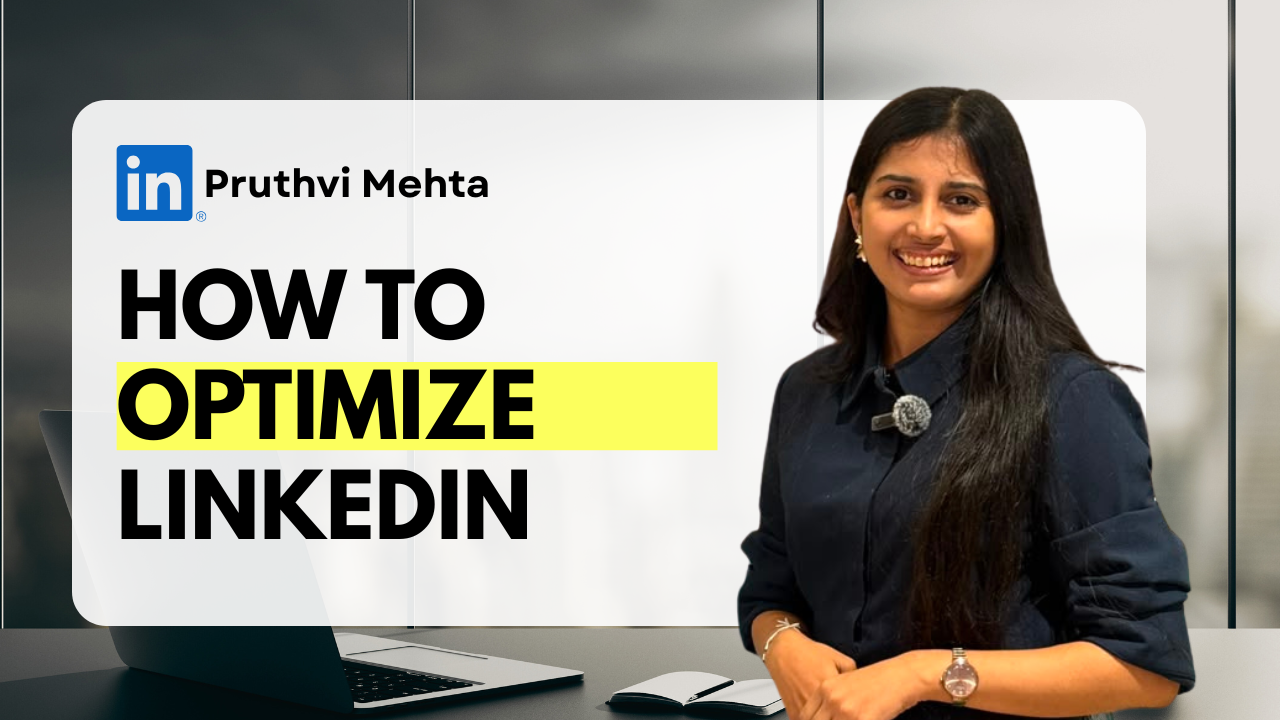
Getting Hired on LinkedIn: Lessons from Pruthvi Mehta
 Aug 08, 2026
For most students, LinkedIn starts as a digital version of a resume.
Add your college.
Upload a photograph.
Mention a few certifications.
Add some connections.
And then… nothing.
The profile exists, but it doesn't necessarily work.
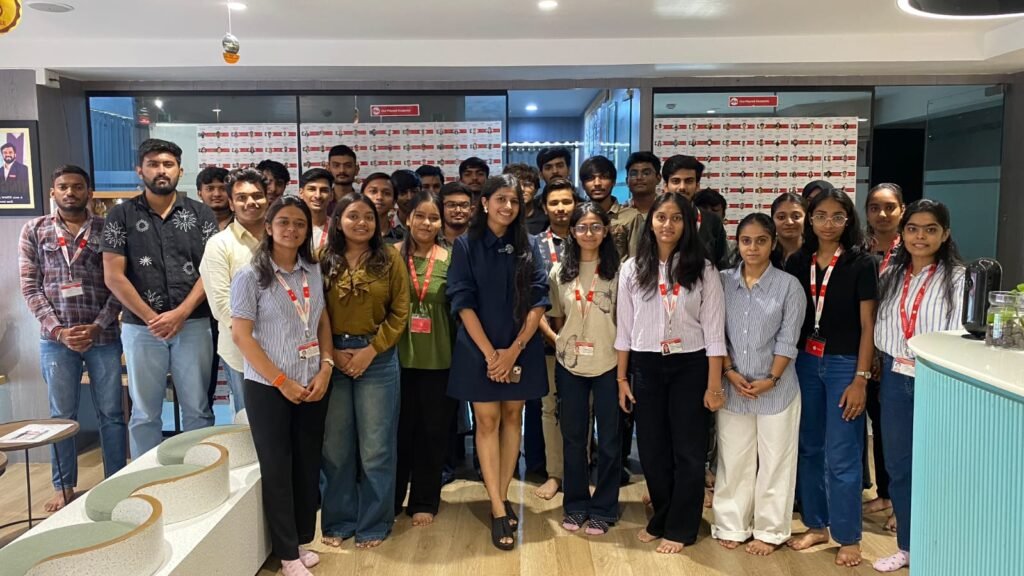
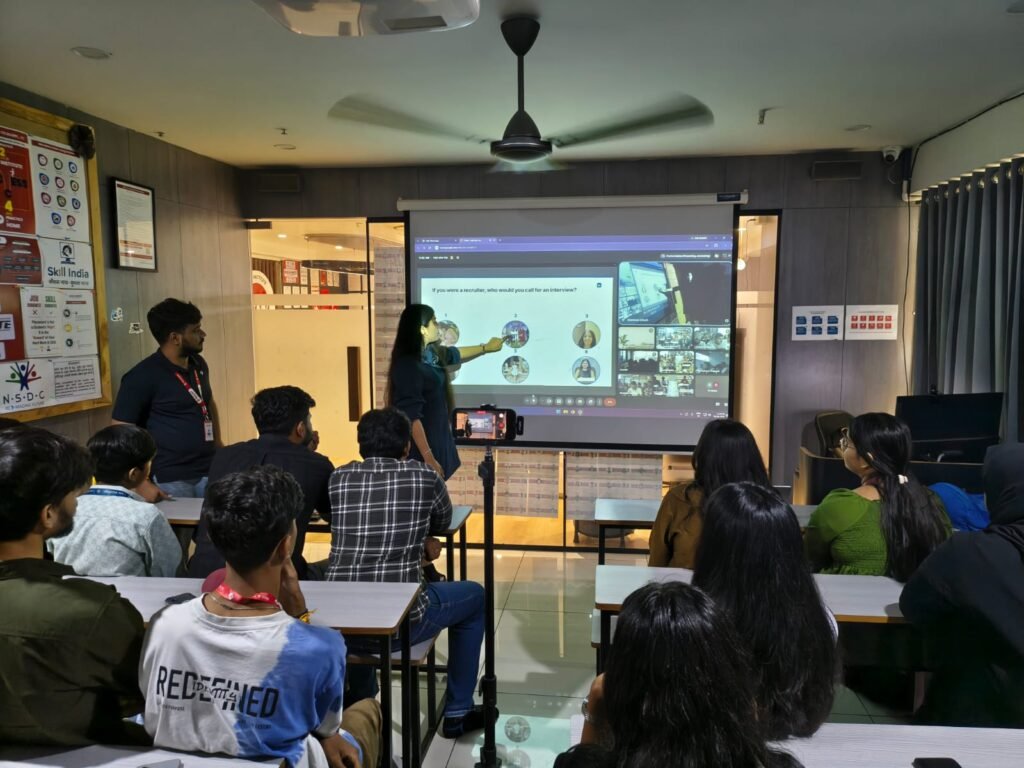
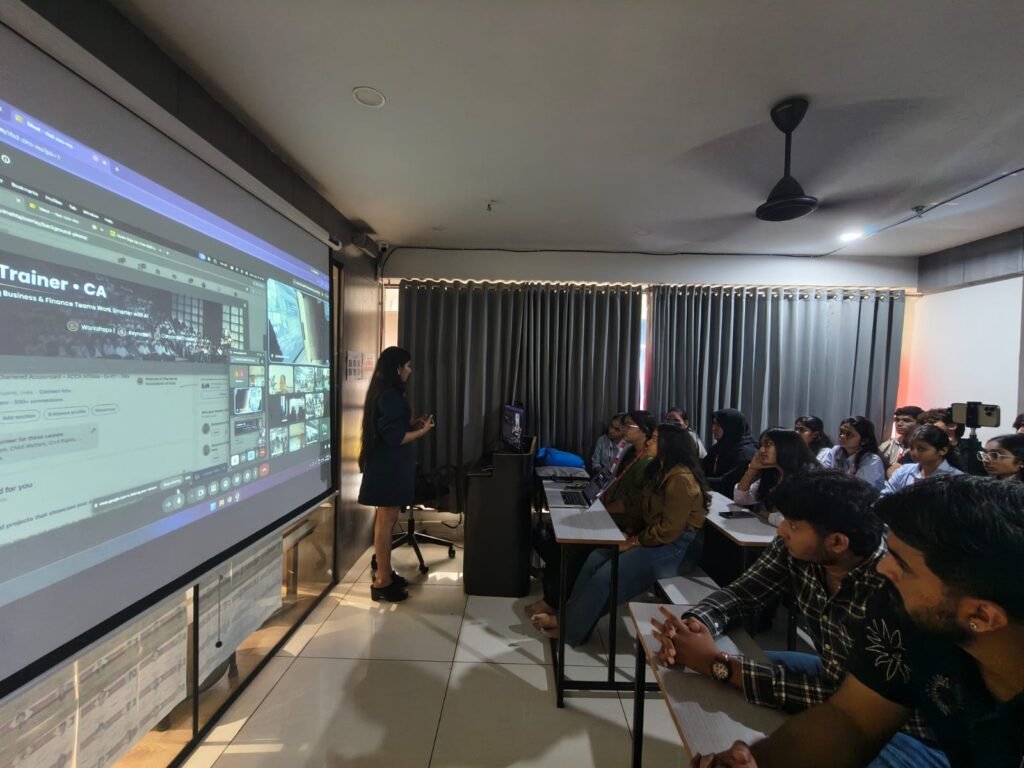
That perspective changed during the recent expert session, “LinkedIn to Landing a Job – Build Your Profile. Build Your Career,” led by Pruthvi Mehta, LinkedIn Content Creator. The session brought together students to understand how LinkedIn can be used strategically—not just to look professional, but to become discoverable, credible, and relevant to recruiters and potential clients.
As someone attending the session, one of the biggest realizations was simple:
Having a LinkedIn profile and having a powerful LinkedIn profile are two very different things.
1. Think Like a Recruiter Before You Build Your Profile
One of the most practical lessons from the session was understanding what recruiters actually look for.
When someone lands on your profile, they don't have unlimited time to figure you out.
They want to quickly understand:
Who are you?
What can you do?
What are you interested in?
Why should they consider you?
That's why your headline, About section, skills, experience, projects, certifications and activity all matter.
Instead of writing:
“Student | Looking for job opportunities”
your headline should communicate your professional direction.
For example:
Business Student | Marketing & Sales Enthusiast | Content & Digital Marketing
The second profile immediately gives the recruiter more context.
2. Don't Just List Skills. Prove Them.
This was one of the most valuable takeaways.
Almost everyone can write:
"Good communication skills."
"Team player."
"Creative."
"Good at marketing."
But where is the proof?
If you say you understand marketing, show the marketing project you worked on.
If you say you're good at content creation, show your content.
If you say you're interested in sales, show the sales project, competition, internship, or experience that demonstrates it.
This leads to a simple rule:
Don't tell LinkedIn what you can do. Show people what you've done.
3. Your College Projects Are More Valuable Than You Think
Students often complete projects, presentations, campaigns, research assignments and competitions—and then forget about them after submission.
LinkedIn gives those experiences a second life.
A project can become part of your professional portfolio.
Instead of writing:
“Completed a digital marketing project.”
Explain:
- What problem did you solve?
- What was your role?
- What tools did you use?
- What did you create?
- What was the outcome?
- What did you learn?
Suddenly, an academic project becomes evidence of capability.
And when you're a fresher without years of work experience, that evidence matters.
4. Optimize Your Profile for the Opportunity You Want
One of the most important mindset shifts from the session was this:
Your LinkedIn profile shouldn't only describe where you are. It should communicate where you're going.
If you want a career in marketing, your profile should reflect marketing.
If you're interested in finance, showcase finance-related projects and learning.
If you want to work in sales, demonstrate communication, negotiation, prospecting or sales experience.
Your profile should make it easy for someone to connect your skills with the opportunity they have.
5. LinkedIn Isn't Only for Getting Jobs
This was another eye-opening part of the session.
LinkedIn can also help students attract clients, build professional relationships and develop a personal brand.
For example, a student interested in graphic design can use LinkedIn to showcase:
- Branding projects
- Designs
- Case studies
- Creative work
- Client feedback
A content creator can share their work.
A marketing student can publish campaign analyses.
A sales student can share insights about customer behaviour.
Over time, the profile becomes more than a resume.
It becomes a portfolio, proof of expertise and professional identity.
6. Your Profile Needs to Keep Growing
A LinkedIn profile isn't something you create once and forget.
Every new experience can strengthen it.
Completed an internship? Add it.
Finished a meaningful project? Show it.
Learned a new skill? Update it.
Won a competition? Share it.
Created something you're proud of? Put it out there.
Learned something useful? Talk about it.
These small actions gradually build something extremely valuable:
Professional credibility.
The Biggest Takeaway
The session wasn't really about learning where to click on LinkedIn.
It was about changing the way students think about their professional identity.
Your resume tells someone what you've done.
Your LinkedIn profile can show them who you are, what you can do, what you're learning, and what you're capable of creating.
And perhaps the most important lesson was this:
Don't wait until you need a job to start building your professional identity.
Start while you're still a student.
Build your profile.
Show your work.
Share what you learn.
Connect with the right people.
Keep improving.
Because when the right opportunity appears, you don't want to start building your profile that day.
You want your profile to have already been building your reputation for you.
Share



Take the Leap - Enroll Today & Kickstart Your Career
Enquire Now