


Emotional Intelligence – The Cost of Suppressed Emotions
 Dec 29, 2025

RWn. Chakshu Adani
Subject Matter Expert
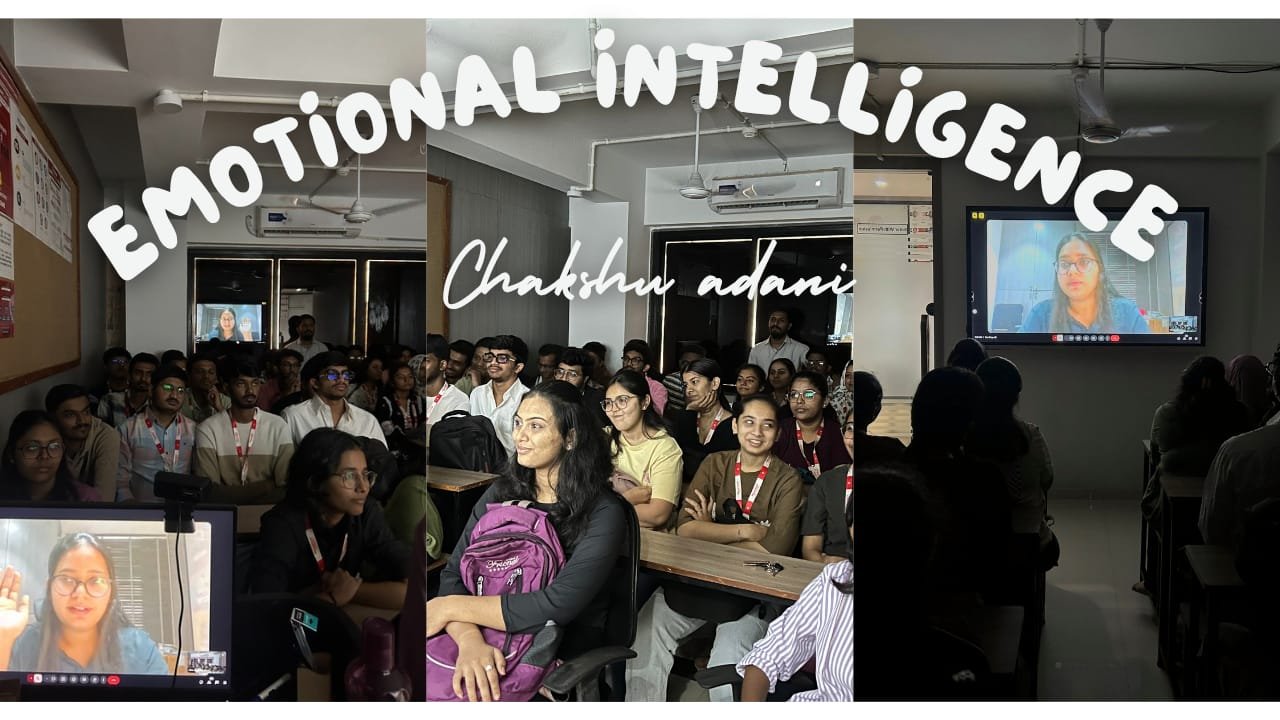
Today’s expert session on Emotional Intelligence, delivered by Chakshu Adani, addressed a deeply misunderstood yet critical aspect of personal and professional growth — the danger of suppressing emotions. The session began with a powerful insight: being non-emotional is often mistaken for being emotionally intelligent, when in reality, it can quietly damage decision-making, relationships, and future opportunities.
Chakshu ma’am explained how constantly hiding emotions or forcing oneself to “stay calm” without understanding or processing feelings causes emotions to pile up internally. Over time, this emotional overload can lead to impulsive reactions, burnout, broken relationships, poor leadership presence, and missed career opportunities. Many students resonated with this truth, as they realised that they were never taught how to handle emotions — only how to hide them.
A major part of the session focused on breaking common myths around emotional behaviour. Chakshu ma’am challenged long-standing beliefs that society often promotes, especially in professional environments, and replaced them with realistic, healthier perspectives that align with emotional intelligence rather than emotional suppression.
Key Myths vs Reality Discussed in the Session
🔹 Common Myths Students Believe
- You should always hide your emotions.
- Being emotional means being weak or unprofessional.
- Strong people are always calm and non-reactive.
- Showing emotions will reduce respect and authority.
🔹 Reality Factors Explained
- Suppressed emotions don’t disappear — they accumulate.
- Emotional ignorance leads to poor reactions at critical moments.
- Unprocessed emotions affect confidence, communication, and decision-making.
- Emotional intelligence is about understanding, regulating, and responding, not hiding.
The session also explored how emotional mismanagement directly impacts personal and professional life. Chakshu ma’am explained how unresolved emotions can affect workplace communication, leadership presence, teamwork, and long-term career growth. Students learned that emotional intelligence plays a vital role in interviews, relationships with managers, conflict handling, and even personal self-worth.
Core Learnings from the Session
- Emotional intelligence is not emotional suppression.
- Awareness of emotions is the first step toward control.
- Poor emotional handling can destroy future opportunities silently.
- Emotional clarity leads to better reactions, confidence, and maturity.
- Growth begins when emotions are acknowledged, not avoided.
Overall, the expert session was deeply impactful and eye-opening. Chakshu Adani delivered real, honest, and practical insights that encouraged students to rethink how they deal with emotions in everyday life. The session didn’t just provide information — it initiated self-reflection, which is the foundation of emotional intelligence. Students walked away with a clearer understanding of themselves and the emotional skills required to grow personally and professionally.
Share



Take the Leap - Enroll Today & Kickstart Your Career
Enquire Now